Free UK postage on orders over £75. All UK orders sent by Royal Mail Tracked 24
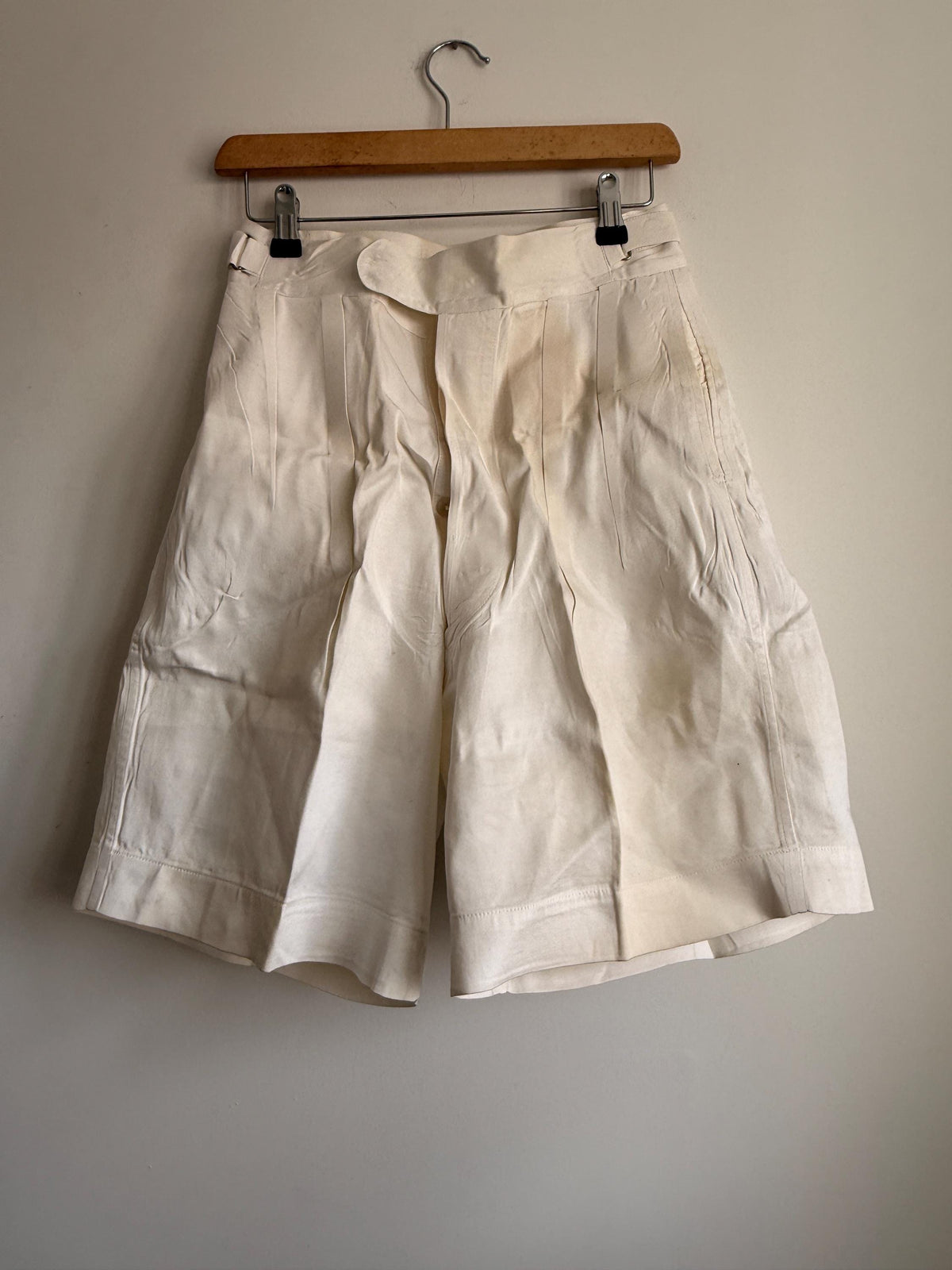
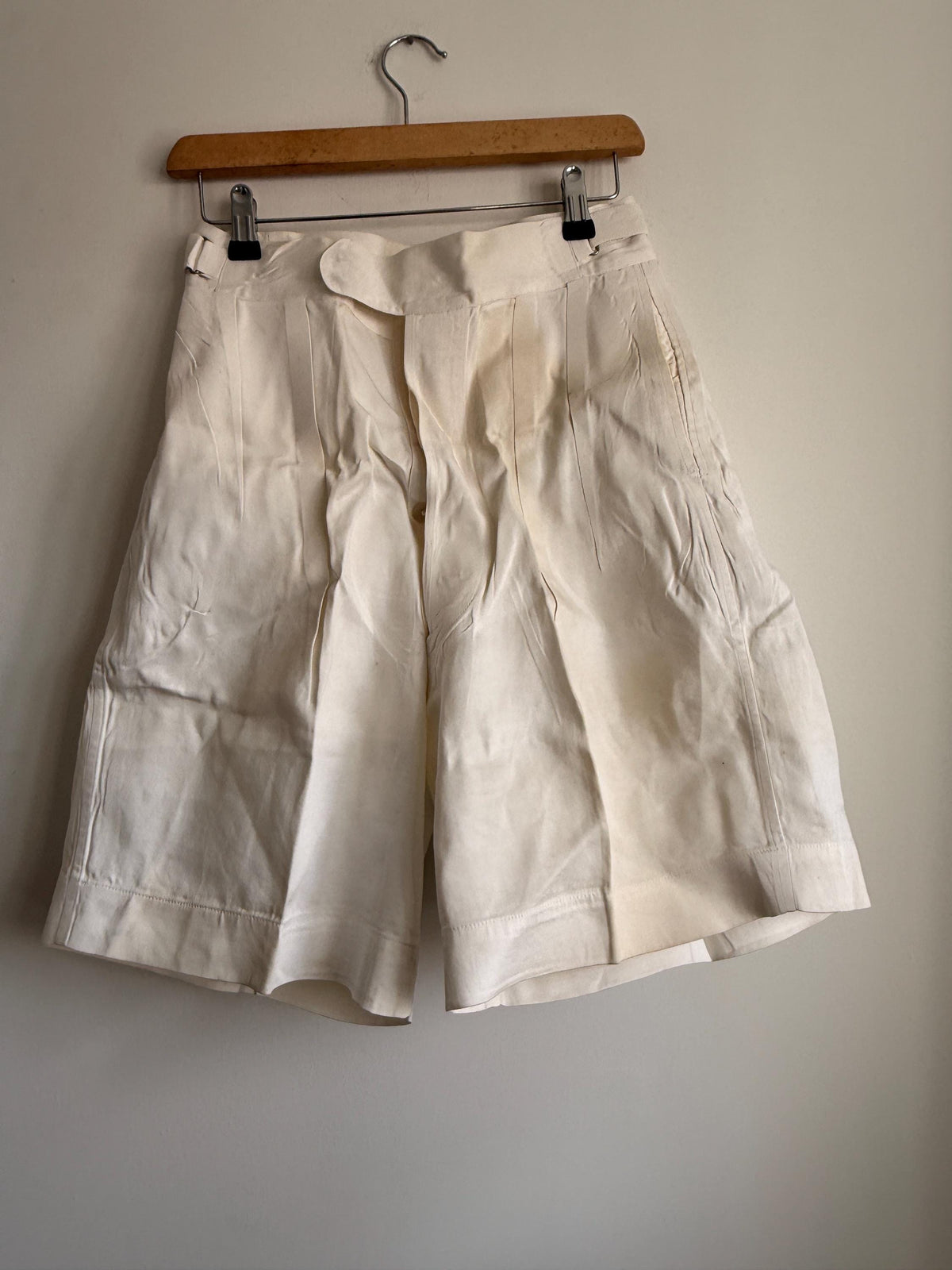
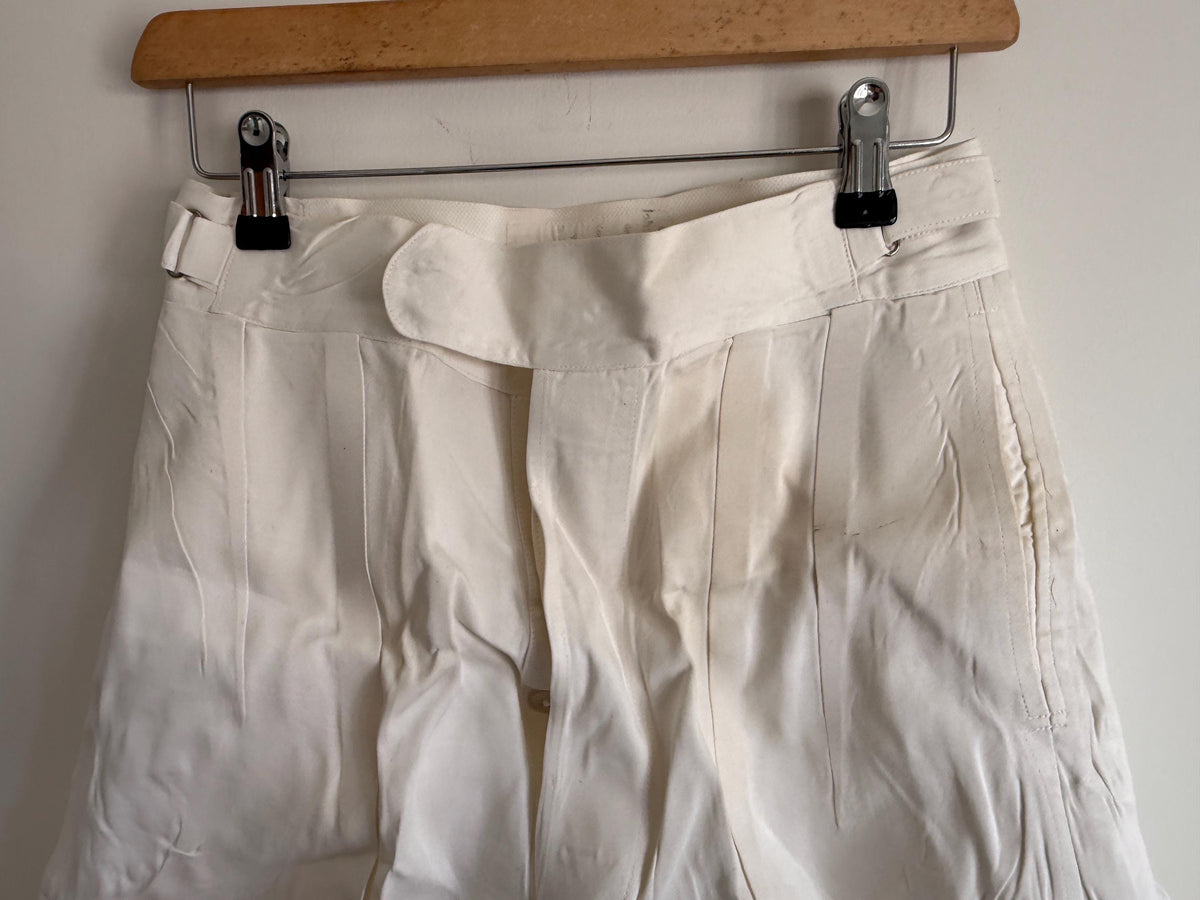
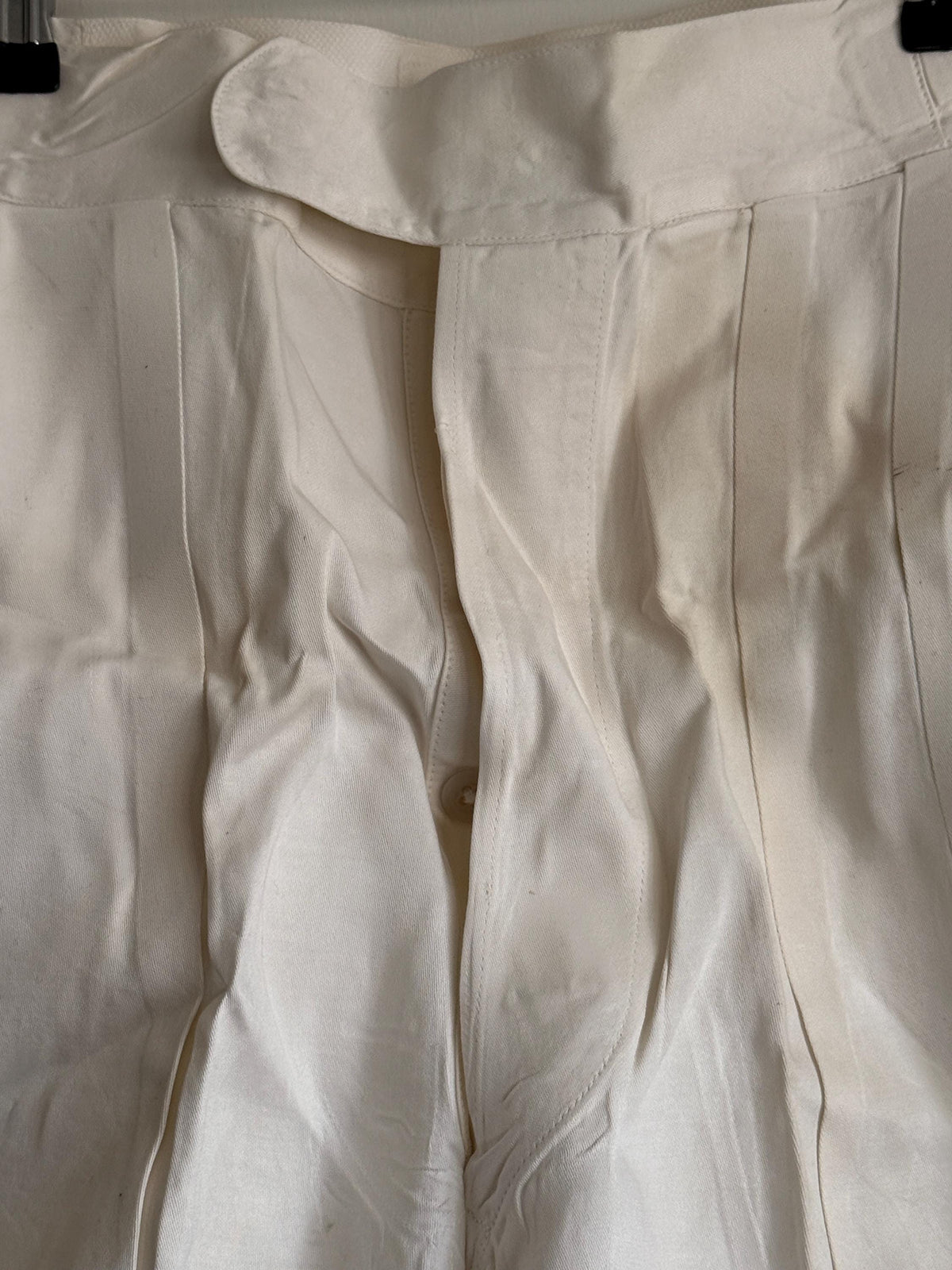
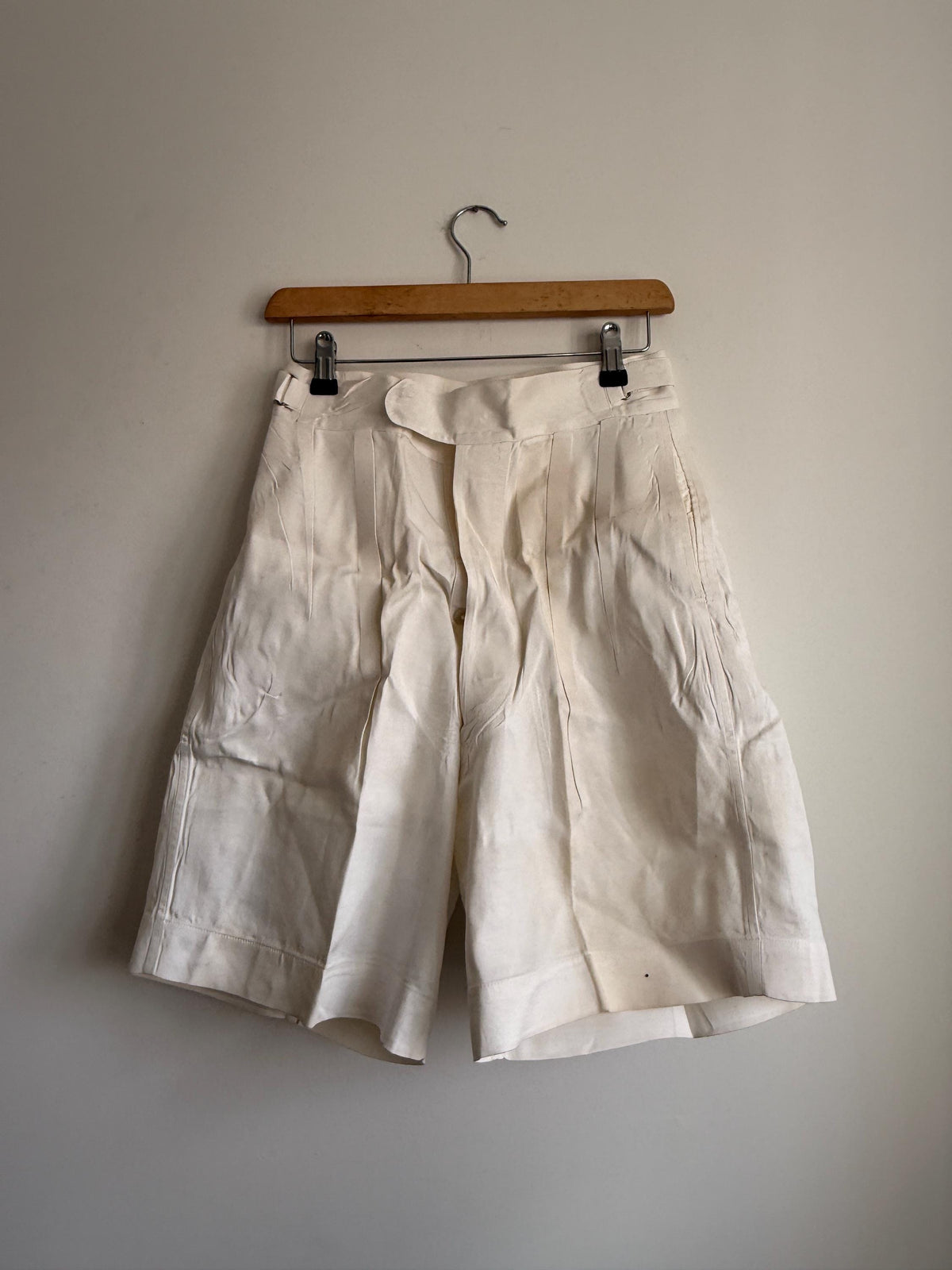
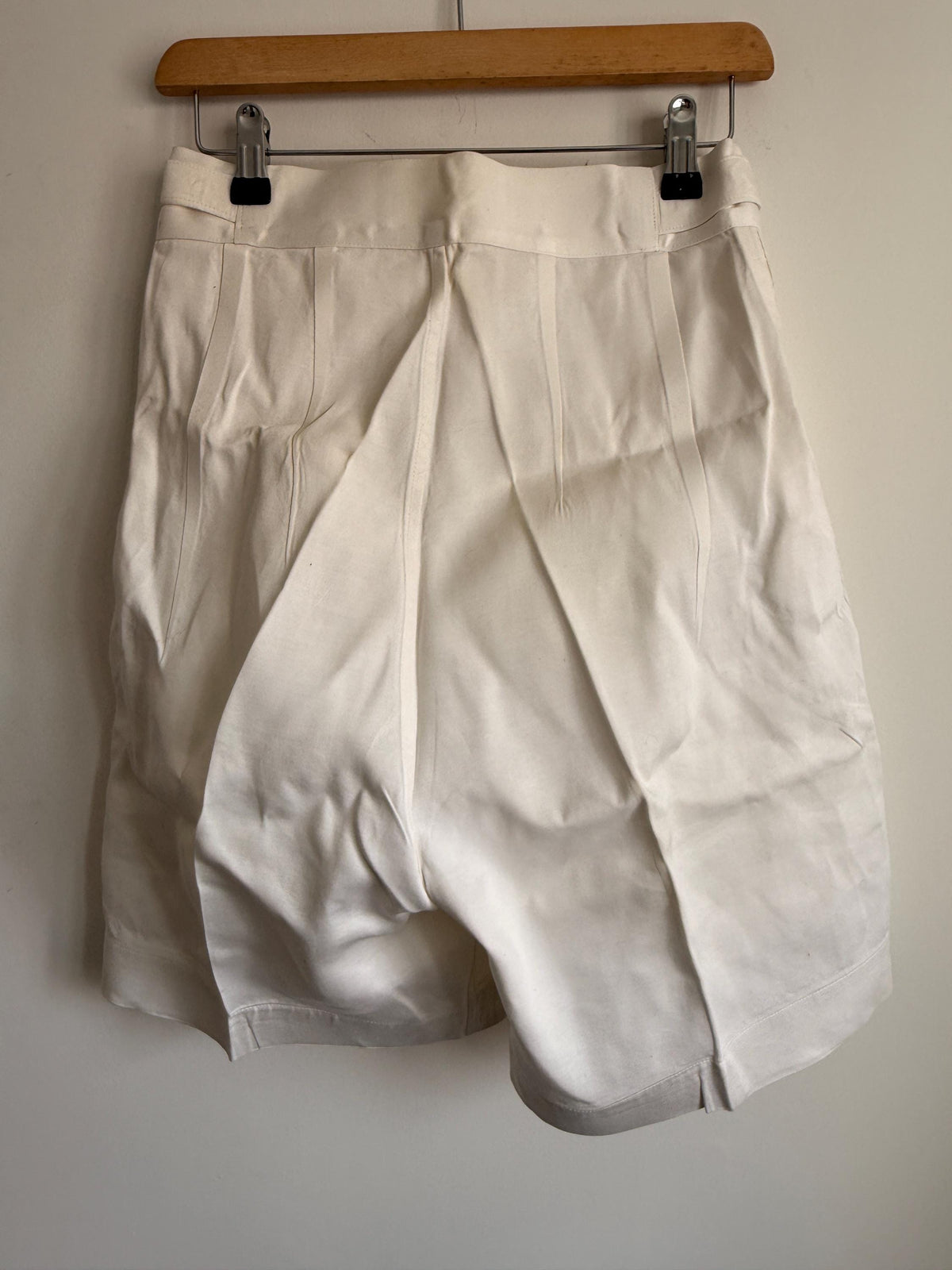
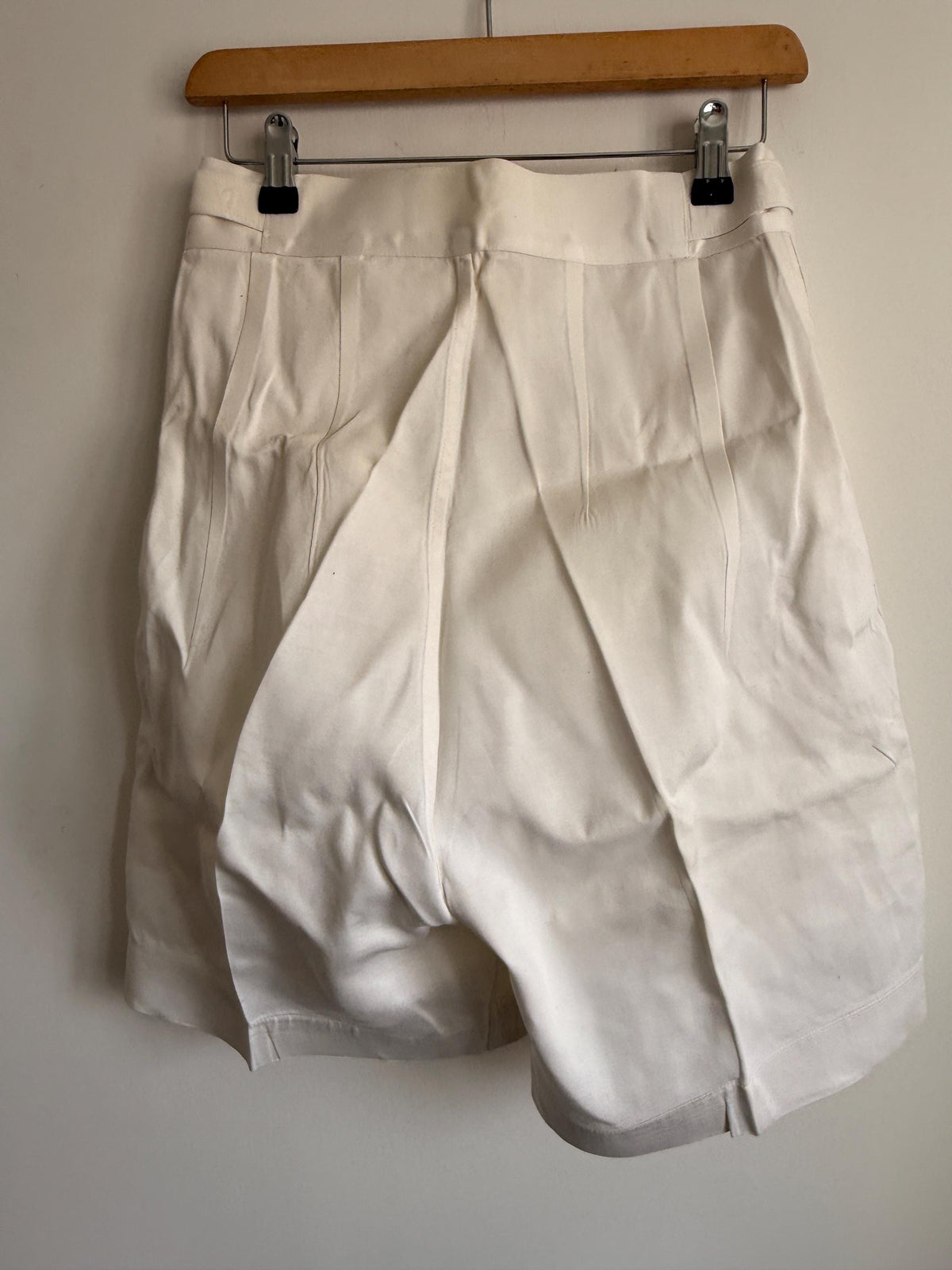
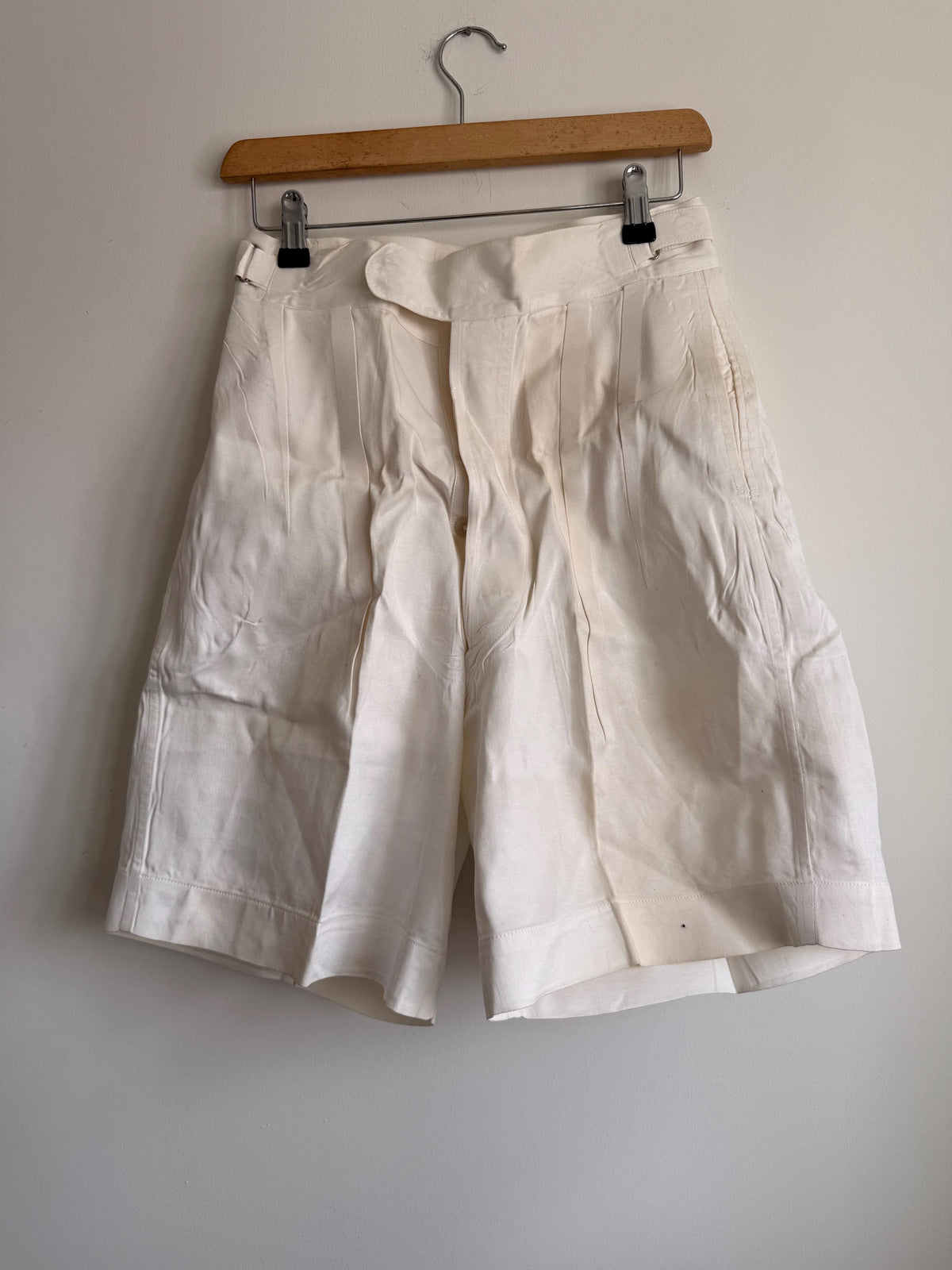
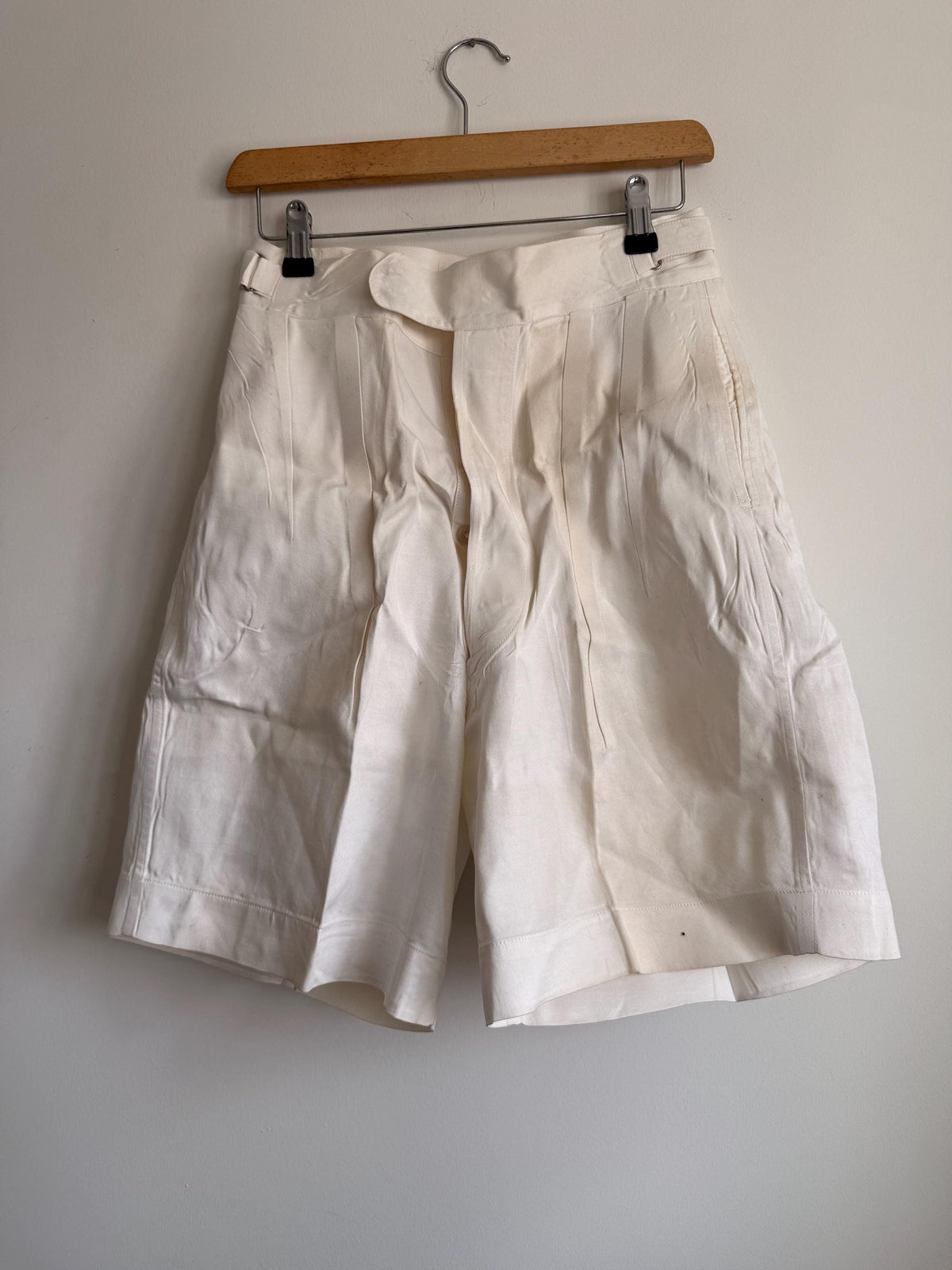
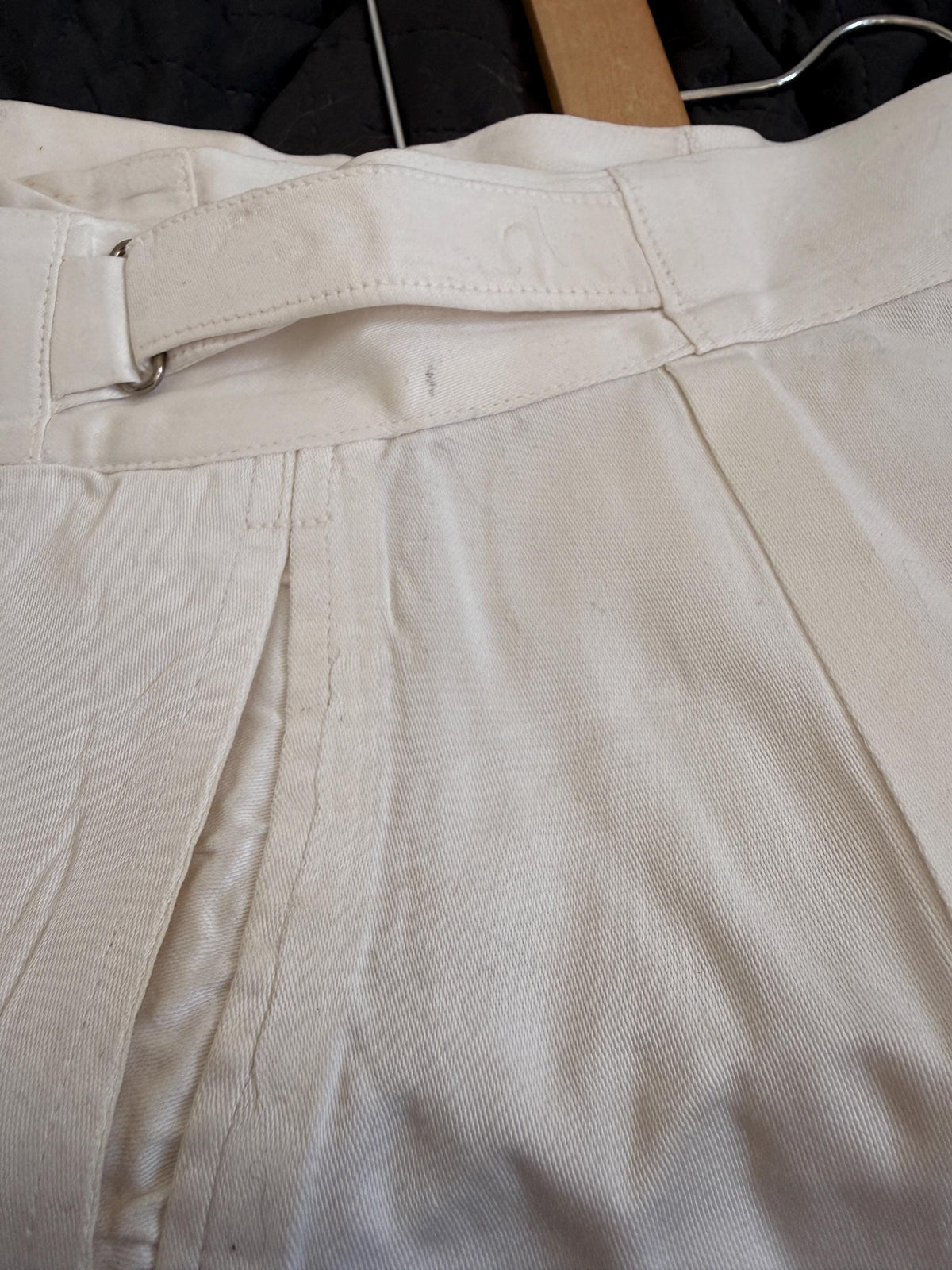
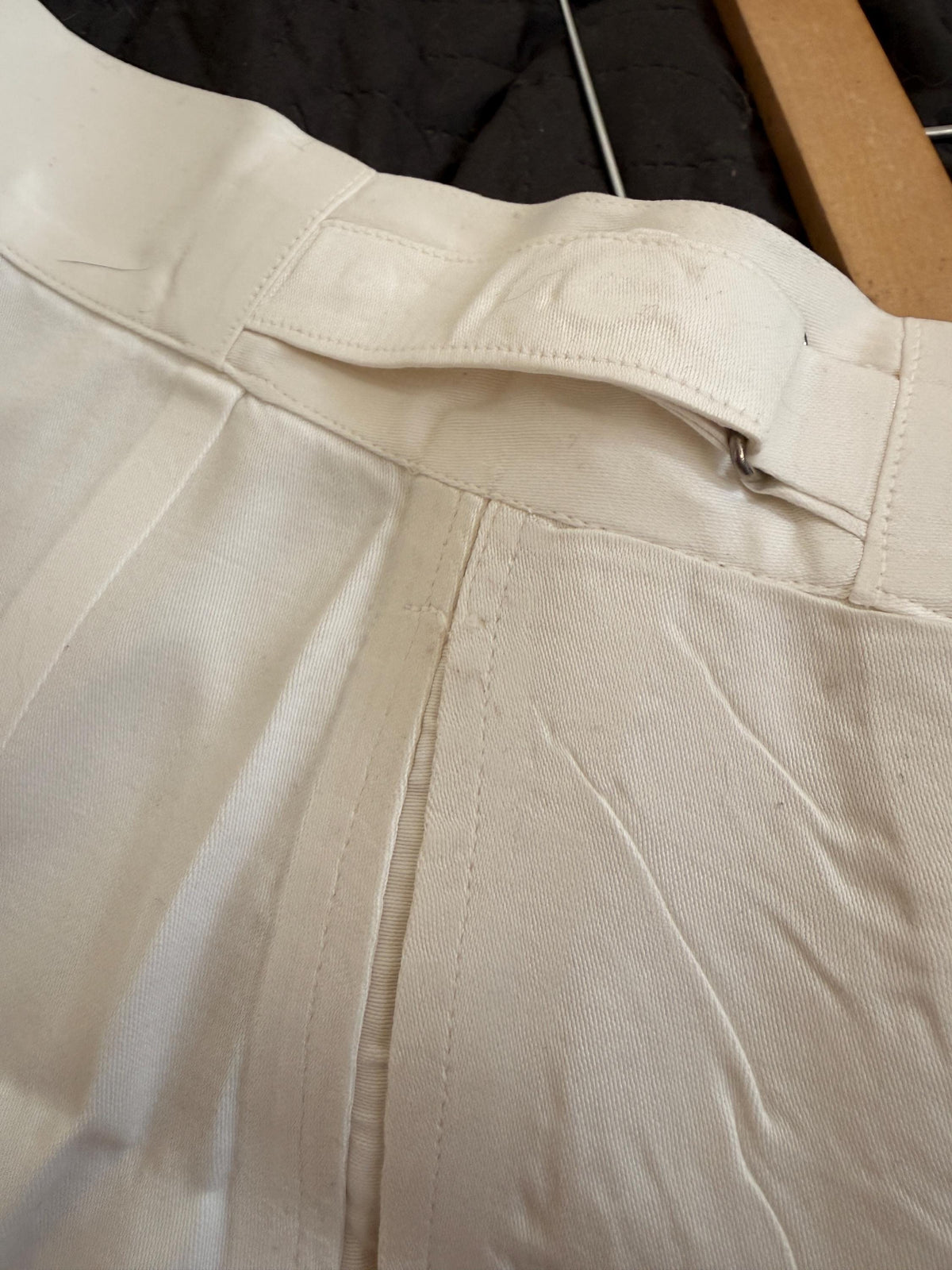
A wonderful pair of original British vintage white cotton drill shorts dating from the late 1930s to the 1940s. Beautifully tailored with a classic high-rise waist, deep front pleats, button fly and side waist adjusters, they perfectly capture the elegant sporting style of the era.
Made from substantial cotton drill, these shorts retain their crisp, structured finish and have clearly been carefully laundered, starched and pressed throughout their life. An increasingly hard-to-find piece of authentic British vintage clothing.
Perfect for collectors, Goodwood Revival, Festival of Vintage, historical costume or simply styling with a Breton knit or vintage shirt for timeless summer wear.
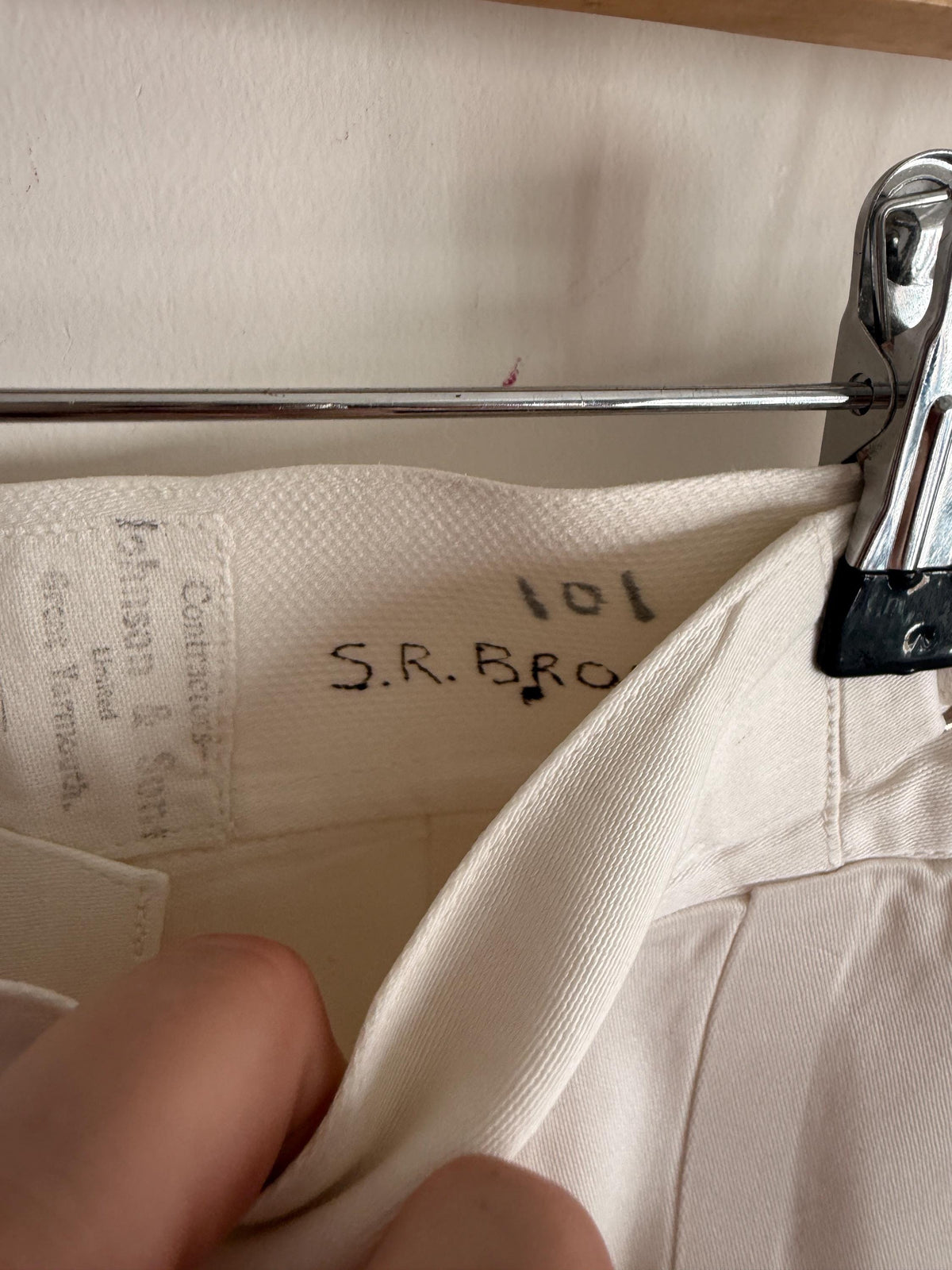
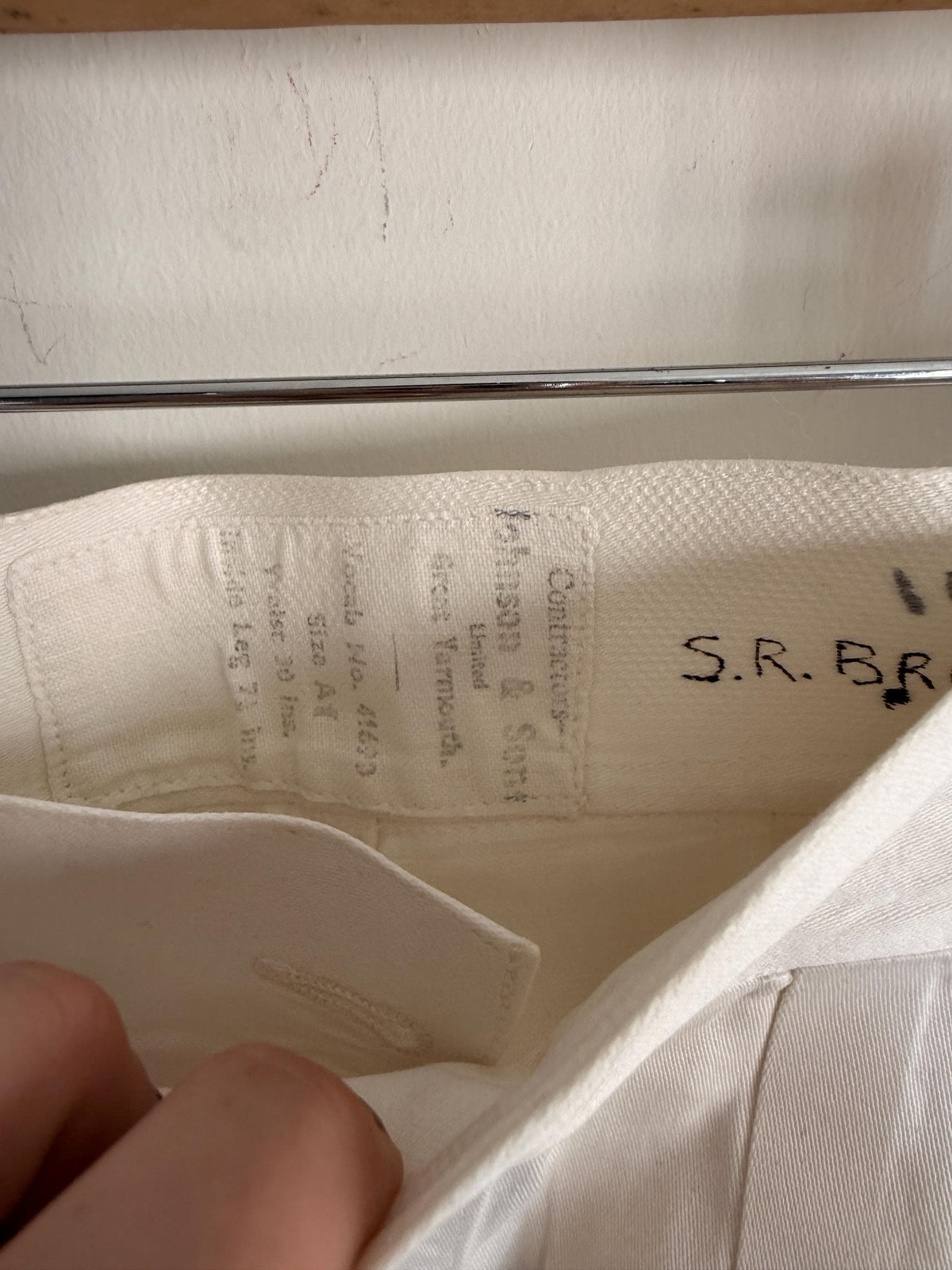
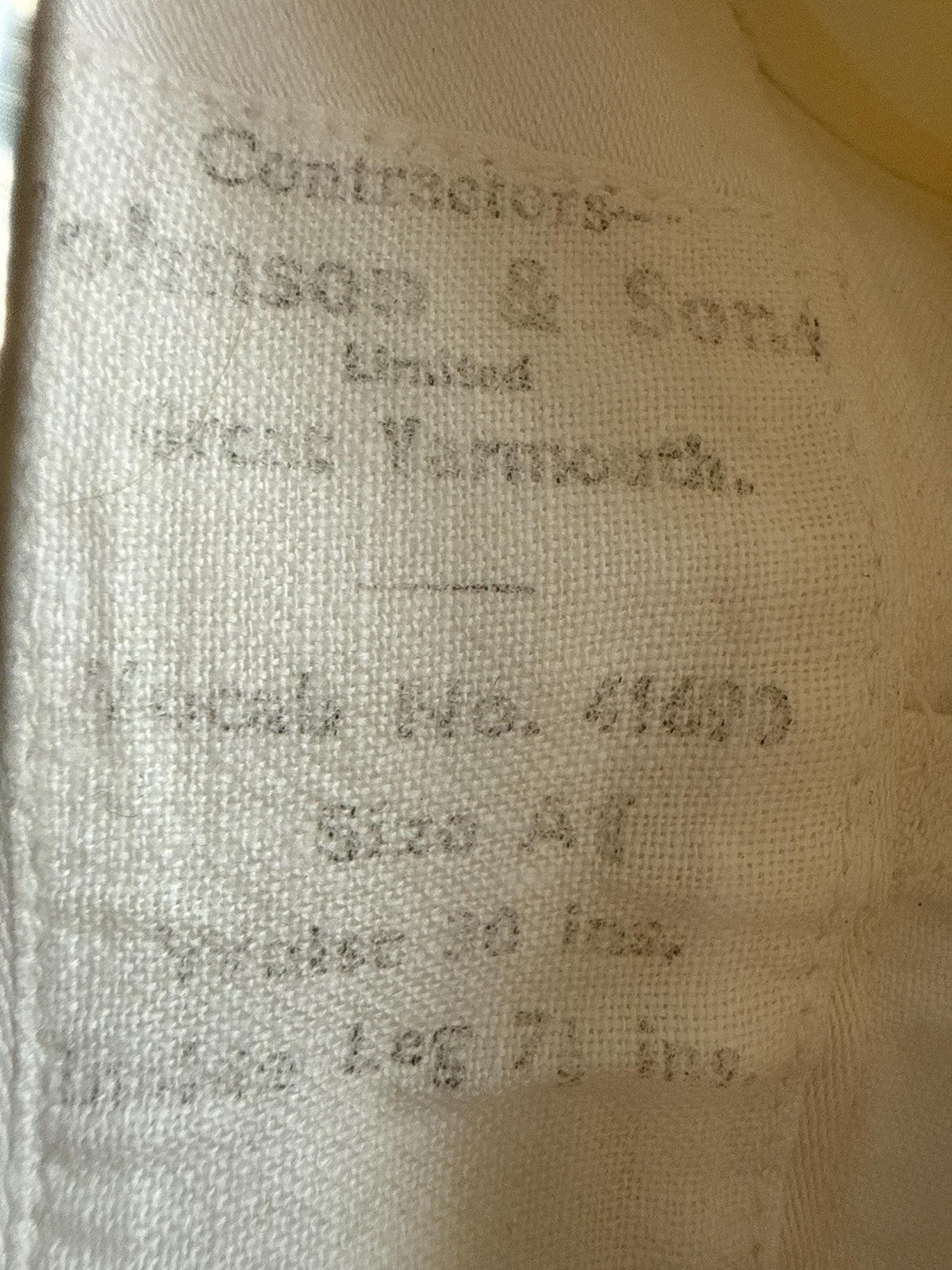
Original 1940s British white cotton drill shorts, believed to have been made by Johnson & Son of Great Yarmouth, a well-known naval and maritime outfitter.
Featuring classic military-style tailoring with a high waist, button fly and side adjusters. Whilst no official Admiralty markings remain, the design and construction strongly suggest they may have been privately tailored naval officer’s or maritime drill shorts from the WWII era.
Features
- Original late 1930s–1940s
- British tailored construction
- Crisp white cotton drill
- High-waisted fit
- Deep front pleats
- Button fly fastening
- Side waist adjusters
- Wide leg silhouette
- Structured pressed finish
- Excellent quality craftsmanship
Measurements
- Waist: 30"
- Hips: 32"
- Rise: 12.5"
- Inside leg: 7"
- Outside leg: 20"
- Hem width: 11"
Condition
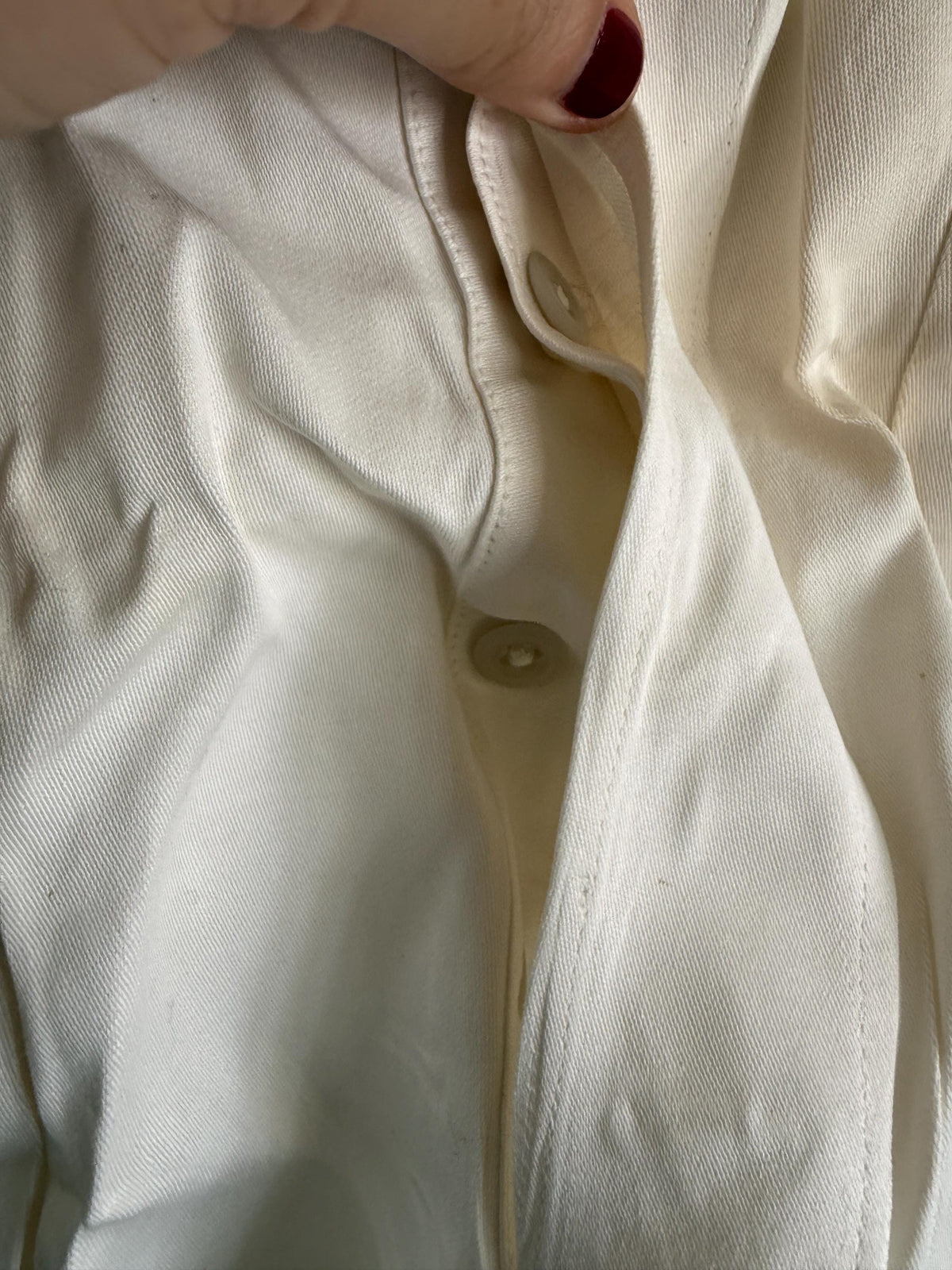
Very good vintage condition with only light signs of age and wear expected from an original garment of this period. They are in as found condition starched and pressed but show signs of ageing. I intentionally have not cleaned these to preserve the starch.
Please study photographs as they form part of the description.